
Diesel at $5.60, Metals Surging, and a War in the Gulf: What the 2026 Cost Crisis Means for Contractors
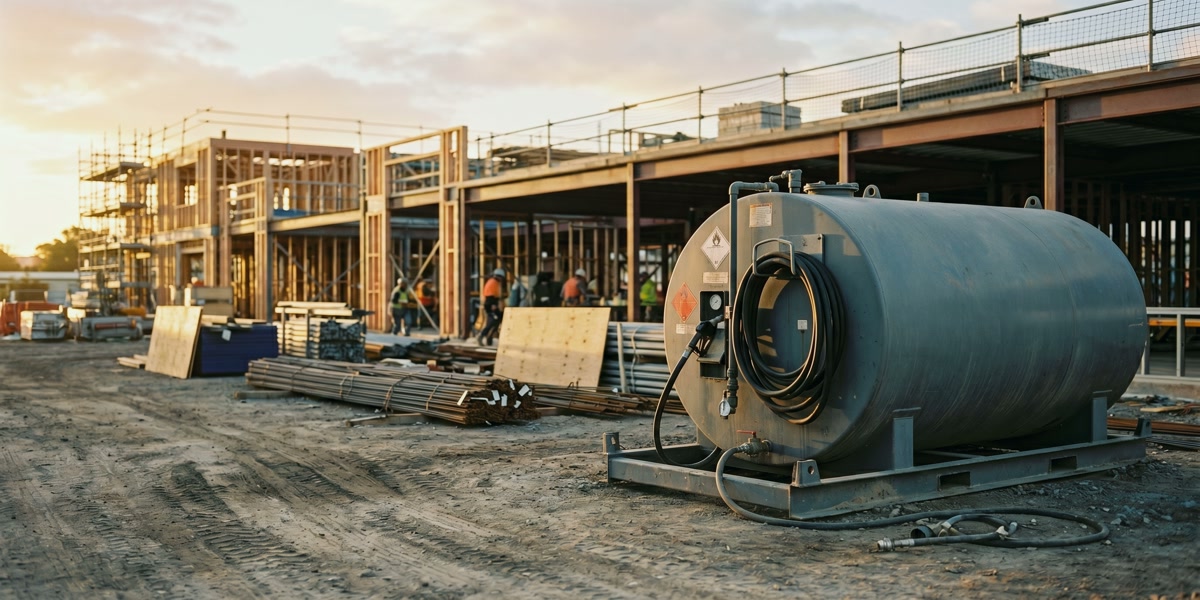
If you've filled a fuel tank or reviewed a materials invoice in the past two months, you already know the story: costs are still moving — and not in your favor. Diesel is hovering near $5.60 a gallon. Aluminum mill shapes are up over 30 percent year-over-year. Steel is up double digits. The Iran war is now in its second month, the Strait of Hormuz is operating at roughly 5 percent of pre-conflict capacity, and a new round of Section 232 tariffs went into effect April 6, pushing steel and aluminum to a 50 percent tariff on their full customs value. The cost shocks of mid-March haven't normalized; they've embedded.
This isn't the moment for panic. It's the moment for clarity. If you can see your cost exposure in real time and adjust your bids, your forecasts, and your purchasing decisions accordingly, you'll come out ahead. If you're watching it all unfold at month-end in a spreadsheet, you'll be playing catch-up all year.
The Numbers Right Now
Let's start with what's actually happening, because the data tells a specific story.
Fuel. The AAA national average for on-highway diesel hit $5.59 per gallon on April 17 — up from the March spike that first crossed $5 a gallon for the first time since 2022 (CBS News). The EIA's April Short-Term Energy Outlook now projects a Q2 2026 average of $5.61 per gallon, with April topping $5.80. For a fleet of 10 trucks running 200,000 miles a month, that's a swing of thousands of dollars per month versus January 2026 levels.
Oil and geopolitics. The Iran war is now in its second month. After crude oil spiked to nearly $120 per barrel in mid-March (NPR), prices have stayed elevated; Brent crude topped $112 last week. Roughly one-fifth of all global petroleum trade passes through the Strait of Hormuz, and according to CNN's late-April visual analysis, vessel traffic through the strait has declined to around 5 percent of pre-conflict levels. Iran briefly opened the strait on April 17 (oil dropped 11 percent on the announcement), but the situation has reverted: as of April 28, Tehran billboards still read "The Strait of Hormuz remains closed." Energy surcharges and material delivery quotes will reflect this for as long as it persists.
Metal commodities. The pressure extends far beyond fuel. The most recent Producer Price Index data (BLS PPI for March 2026, released April 14) shows aluminum mill shapes up 30.5 percent year-over-year. Steel bars, plates, and structural shapes are up 12.1 percent, with steel pipe and tube up 9.4 percent. These aren't isolated pockets of inflation. They're broad-based, across the material stack that construction depends on.
Aggregate cost pressure. The US Producer Price Index for final demand rose 0.5 percent month-over-month in March and 4.0 percent year-over-year. Construction materials specifically rose 0.4 percent month-over-month on a seasonally adjusted basis (BLS, PPI, March 2026). The trajectory is the largest sustained build-up since early 2022.
And here's the uncomfortable truth: tariffs are making it worse. On April 6, 2026, restructured Section 232 tariffs went into effect: 50 percent on the full customs value of steel, aluminum, and copper articles, with derivative products carrying 25 percent. A reduced 15 percent rate applies to certain industrial and electrical grid equipment through 2027. The Section 122 global tariff sits at 10 percent on most imports, in effect through July 24, 2026. For firms importing materials or components, the layered math is punishing.
What Contractors Are Actually Doing
The numbers above aren't abstract. They're forcing decisions on job sites and in estimating departments right now.
According to the latest Sage and AGC joint research, 53 percent of US contractors rank material costs among their top five business concerns. What's worth noting is the behavioral response: 63 percent of US firms report that projects have been postponed, scaled back, or cancelled in the past six months due to cost pressure (Sage/AGC, 2026 Construction Hiring and Business Outlook).
That tells you something important. Contractors aren't just absorbing these costs. They're walking away from work. They're pushing back on timelines. They're renegotiating scopes. The firms that are winning right now aren't the ones pretending costs are stable. They're the ones being transparent about the impact and managing it actively.
The Real Exposure: Visibility and Speed
Here's where most contractors are vulnerable, and it's worth saying directly: if you're not seeing cost changes as they happen, you're already behind.
Think about a typical cost control workflow. A project manager submits a change order request. It gets reviewed. Procurement sourced a material two weeks ago at one price and documents it. Finance records the change at month-end. By then, you're three weeks behind the market, and a cost increase that cost you 2 percent of margin has become a 4 percent hit because you didn't catch it in time.
The firms that protect margins in volatile markets do one thing differently: they see cost impacts in real time, not at month-end.
That means your job costing system needs to connect directly to your vendor pricing data. When a supplier raises prices, you need to see it reflected in your active project forecasts immediately. When fuel surcharges shift, you need to recalculate your equipment rental costs and delivery spreads before you bid the next phase. When a commodities spike hits your materials list, you need to update your cost-to-complete projection before the cash commitment happens.
How Real-Time Visibility Works in Practice
If you're running Oracle NetSuite as your core financial system, you have a strong foundation for construction financial management. NetSuite handles the core workflows: GL, AR, AP, project profitability. But construction-specific cost management, including real-time job costing, vendor pricing linked to project budgets, change order tracking, and forecast updates, requires construction-specific extensions built into the platform itself.
That's what NetSuite + FullClarity does. FullClarity is built inside NetSuite and extends it with construction workflows: job costing that reflects your actual material commitments, vendor pricing that stays in sync with your project cost structures, change order tracking that shows you the impact immediately, and real-time forecasting that adjusts as costs move.
When a supplier raises a price, your cost forecast updates. When you need to bid a change order, you're pulling live numbers, not estimates from two weeks ago. When fuel surcharges hit delivery costs, you see the impact on your project margin before you commit to the timeline.
In a market where the difference between catching a cost increase on day one and catching it on day 30 is thousands of dollars, that visibility matters. A lot.
What You Can Do Starting Today
You don't need to overhaul your entire system to protect yourself in the next 90 days. But you do need to do three things.
First, establish a weekly cost review cycle for active projects. Not at month-end. Weekly. Pull your material commitments, your vendor quotes, and your fuel surcharge assumptions. If any of them have changed, update your project forecast.
Second, lock in prices where you can on long-lead materials. If you know you'll need structural steel or rebar in the next four months, source it now and get commitment prices. The advantage goes to firms that move quickly.
Third, have a conversation with your customers about cost escalation clauses if you haven't already. If your contract doesn't have a mechanism to pass through material and fuel cost increases, you're absorbing them yourself. That margin math is brutal in a 4 percent year-over-year cost environment with 30 percent aluminum spikes layered on top.
FAQ
Are these prices going to stay this high?
No one knows for certain. Geopolitical situations change. Energy markets are notoriously cyclical. What's clear is that they haven't fallen back to January 2026 levels and don't appear poised to. Plan for $5.50-plus diesel and elevated metals prices through at least Q2.
Should I stop bidding work until costs stabilize?
Walking away from work isn't strategic. Bid correctly: use current cost data, build in realistic contingency, and get escalation language in your contracts.
How do I know if my cost forecasting is fast enough?
If you're waiting until month-end close to know whether a project is on budget, it's too slow. You should know within a week.
Does fuel surcharge language actually matter in contracts?
Absolutely. If your contract has a fuel surcharge adjustment tied to an index, you pass through 85 to 95 percent of the increase automatically. Without it, you eat the whole thing.
Are tariffs going to get worse?
Policy shifts quickly. Section 232 was restructured on April 6, 2026: steel, aluminum, and copper articles now carry a 50 percent tariff on full customs value, with 25 percent on derivative articles and 15 percent on industrial and electrical grid equipment through 2027. The Section 122 global tariff sits at 10 percent through July 24, 2026. Budget for them in your bids.
The construction industry thrives on clarity. You see a problem, you address it, you move forward. Right now, the problem is visible and persistent. The firms that respond quickly will come out ahead.
If you want to dig into how to build real-time cost visibility into your job costing workflow, it starts with a conversation about how your current system works and where the gaps are. We're here if you want to talk through it.
Sources
- AAA, AAA Fuel Prices, April 17, 2026
- U.S. Energy Information Administration, April 2026 Short-Term Energy Outlook, 2026
- U.S. Bureau of Labor Statistics, Producer Price Index, March 2026, 2026
- The White House, Strengthening Tariffs on Steel, Aluminum, and Copper Imports, 2026
- CNN, How traffic through the Strait of Hormuz shrank to a trickle, 2026
- Sage/AGC, 2026 Construction Hiring and Business Outlook, 2026
- Associated General Contractors of America, Tariff Resource Center for Contractors, 2026
- CBS News, Diesel Tops $5 a Gallon for the First Time Since 2022, 2026
- NPR, Iran War Gasoline Prices, 2026